News


A new moth species for the reserve


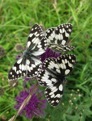
A new butterfly for the reserve


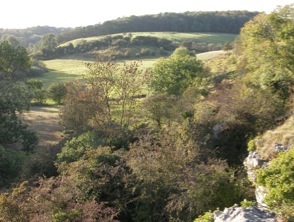
Brockadale gets bigger


About the reserve


Brockadale is a Nature Reserve of the Yorkshire Wildlife Trust and lies between the villages of Wentbridge and the Smeatons just to the east of the A1, 10 miles north of Doncaster.


Its name derives from 'broken dale', aptly describing the craggy outcrops of limestone which dominate parts of the reserve. Many of the steep-sided slopes are covered in semi-natural woodland, or meadows which have been long unploughed.


Brockadale became a Yorkshire Wildlife Trust reserve in 1966, but with several extensions is now about 2km long and covers much of the valley between Wentbridge and the Smeatons. Most of this beautiful reserve is classed as a Site of Special Scientific Interest (SSSI).


The reserve has one of only two sites in England where a minute snail called Truncatellina cylindrica can be found.


Latest news


Our events


    profile


One of the Yorkshire Wildlife Trust’s 80 nature reserves.


    Where is it?


It can be reached from Little Smeaton, Kirk Smeaton and Wentbridge along public footpaths, but the reserve car park is down an unmarked lane (Leys Lane) off New Road, Little Smeaton, about 1 mile west of the village. See Map


    contact


Yorkshire Wildlife Trust

1 St George’s Place

York YO24 1GN


Tel: 01904 659570

Fax: 01904 613467


Website: www.ywt.org.uk

email: info@ywt.org.uk


Brockadale

Site updated:

July 2010


Highlights of......

...... summer


The first of the reserve’s special flowers are now fading, but it is still obvious that it has been an excellent year for cowslips and early purple orchids. Lets hope that this sets the trend for the rest of the summer. The week of warm weather in May has helped the season to catch up, but the  May blossom - the hawthorn flowers - didn’t come out until about the 20th of the month - much later than normal. It has put on a spectacular show which the return to cooler weather will prolong.


The high temperatures coincided with the first broods of several butterfly species such as common and holly blue, brown argus, brimstone, peacock and comma. With luck they should have laid plenty of eggs and we should see good numbers of all these species later in the summer as their second broods emerge.


This year is when we carry out our 5-yearly survey of breeding birds. We are about half way though the season, and have noted some pluses and some minuses compared to past years. Grey wagtails have bred for the first time, and nuthatches have made a welcome return. There are good numbers of lesser whitethroat and green woodpeckers this time too. However there are no cuckoos and we are worried about the turtle doves, and corn buntings seemed to disappear at the last moment. The full results will be available in the autumn.


The next weeks will see the main sequence of flowers get well and truly under way. Cow parsley, dog daisies, scabious and rock rose will dominate different parts of the reserve, with dozens of minor players adding to the tapestry of colour.